
Taming complexity
I’ve spent a fair amount of my time learning about the different systems and rules that build and define a service. They usually hold the answers to why the user experience isn’t what it should be and it often starts with: It’s not that simple!
Only once I understand the complexity for what it is – many interacting systems – I can start turning it into something that feels manageable, if not simple.
CASE STUDY 01
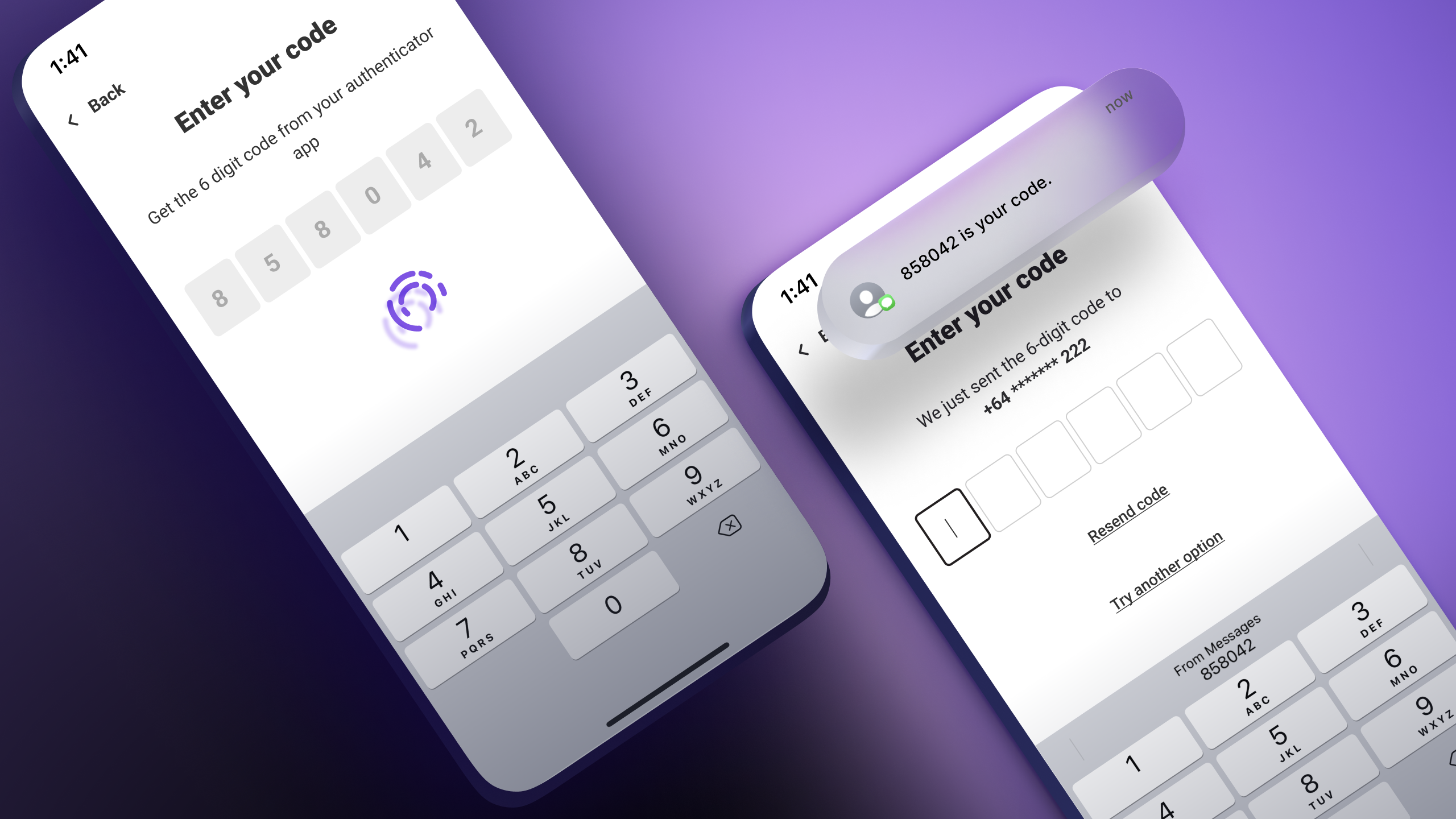
Using UX practices to support complex decision making
Client
Hatch Invest (New Zealand), 2023
Role
Senior Product Designer
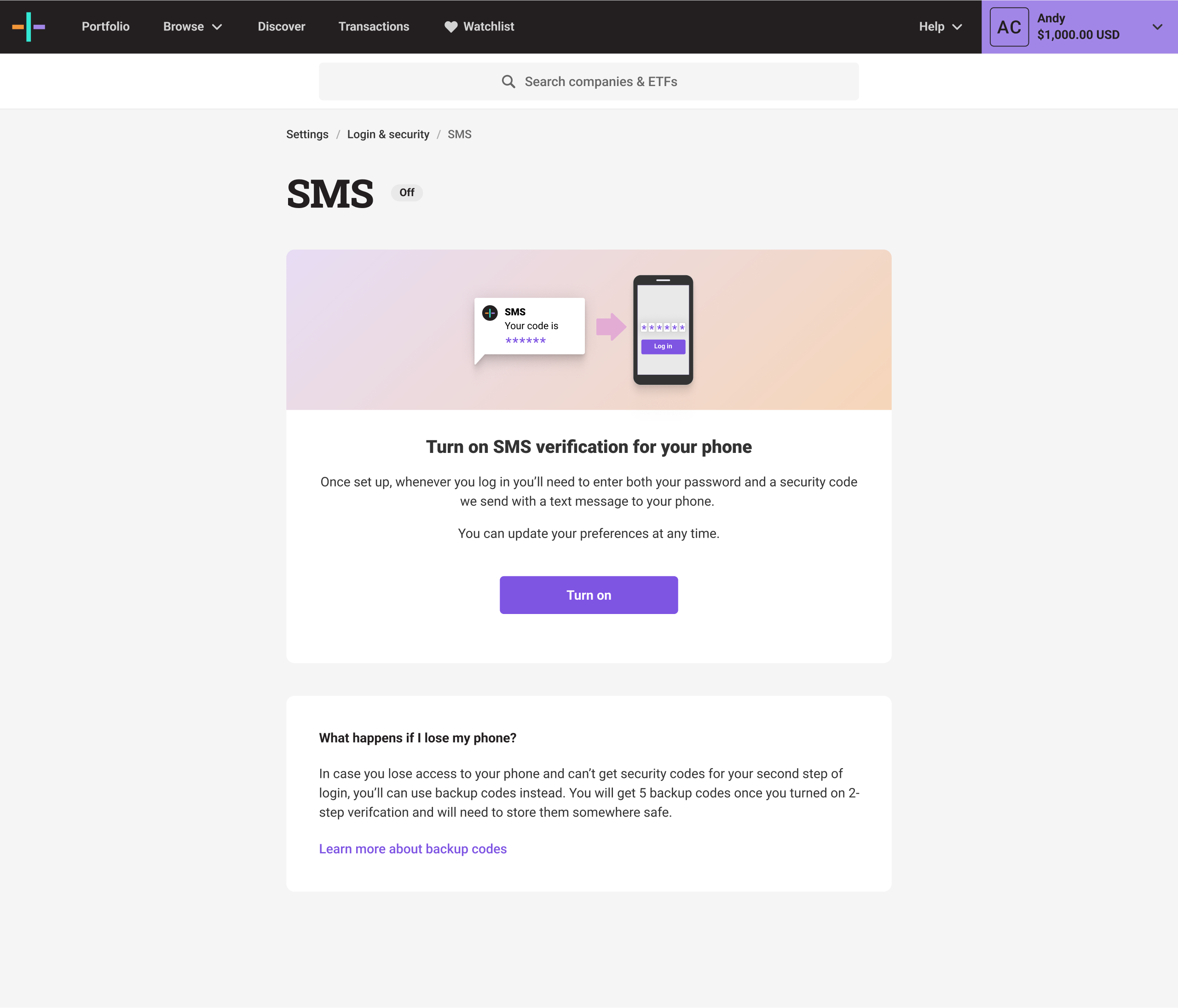
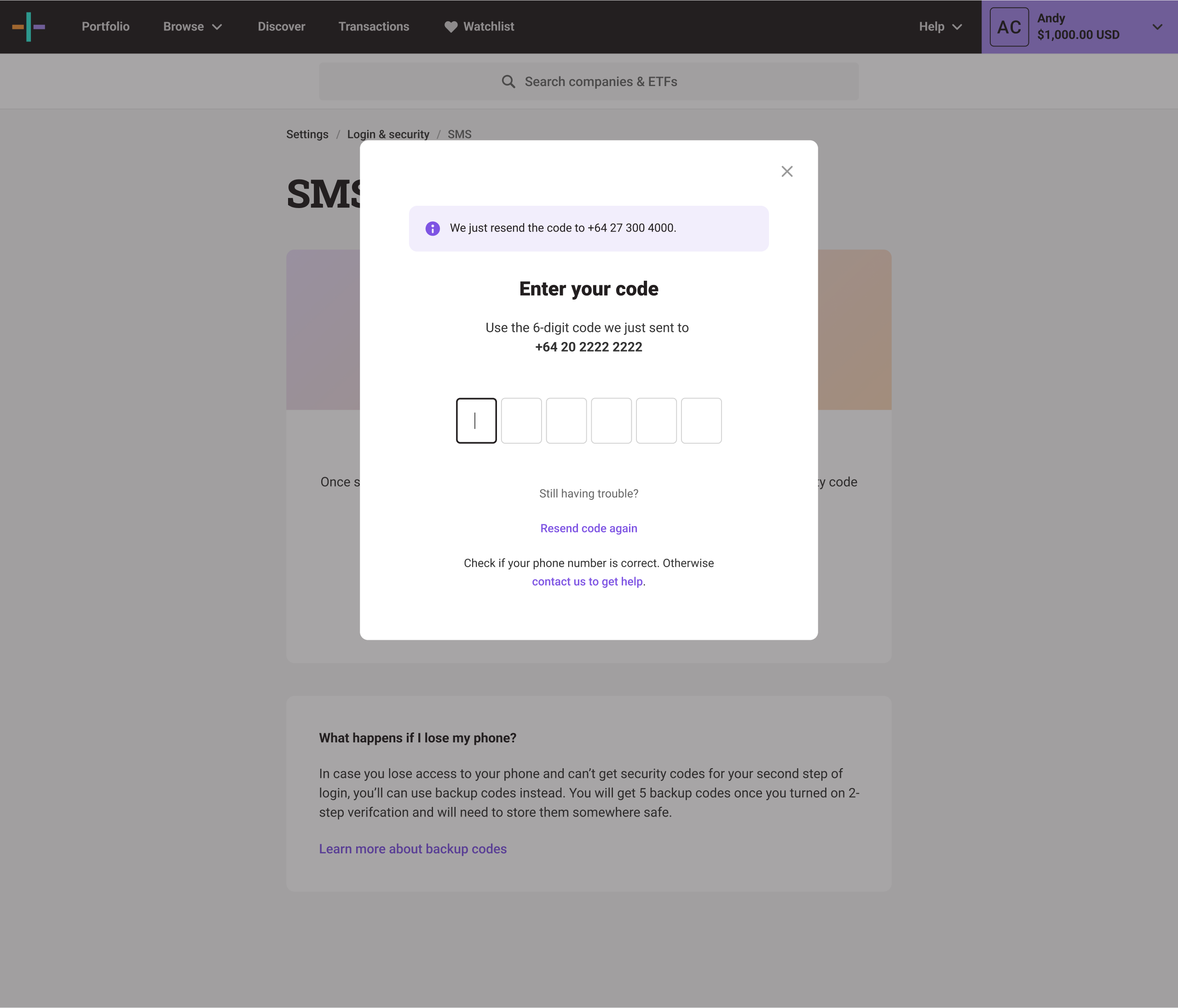
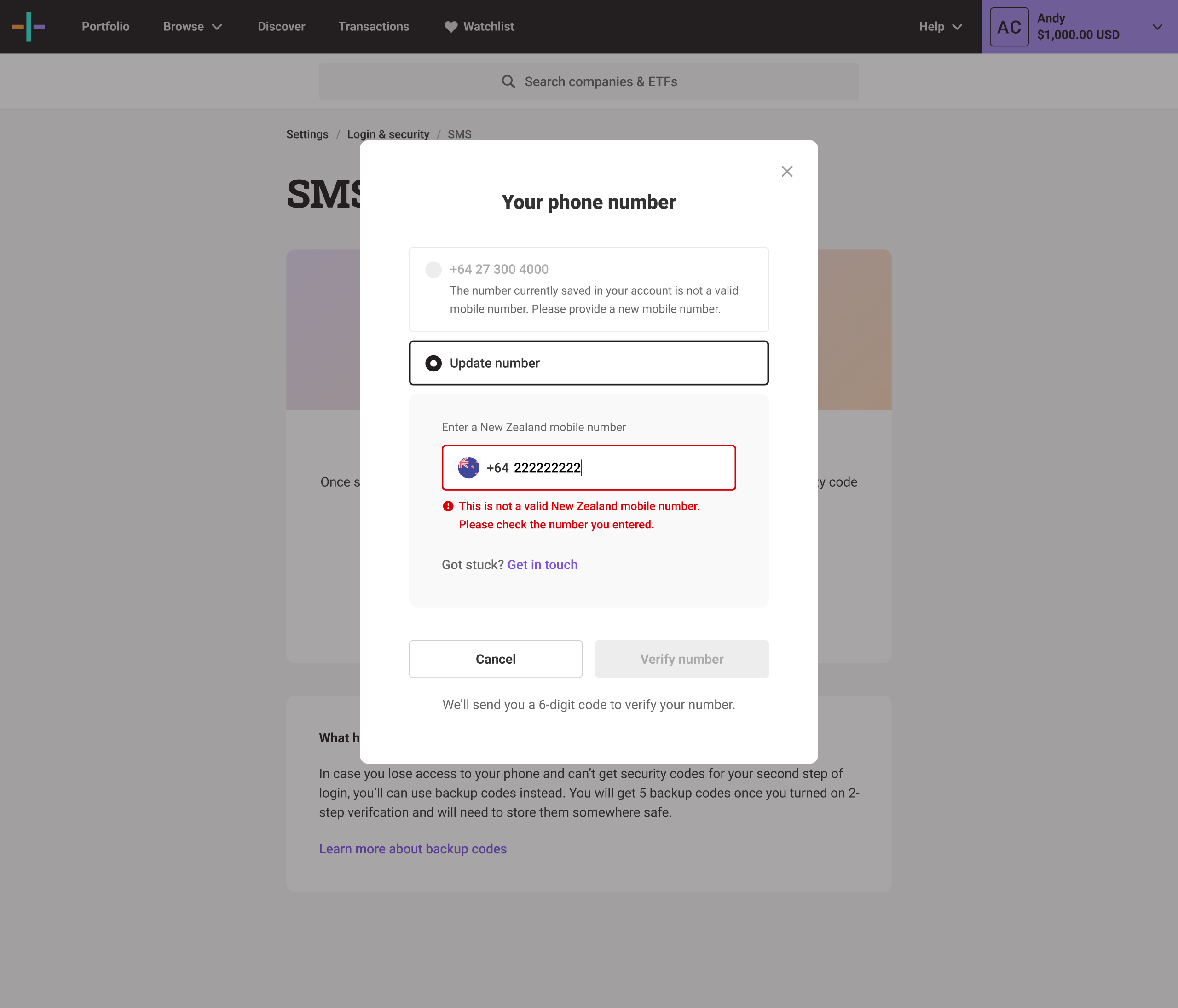
The investing platform Hatch wanted more customers to use 2-factor authentication. The existing feature was rudimentary and had obvious UX issues.
We kicked off the discovery work. We first wanted to learn more about our customers’ behaviours and attitudes towards secure login methods. A survey revealed that our customer base was split into two camps: those who want top security and those who want convenience.
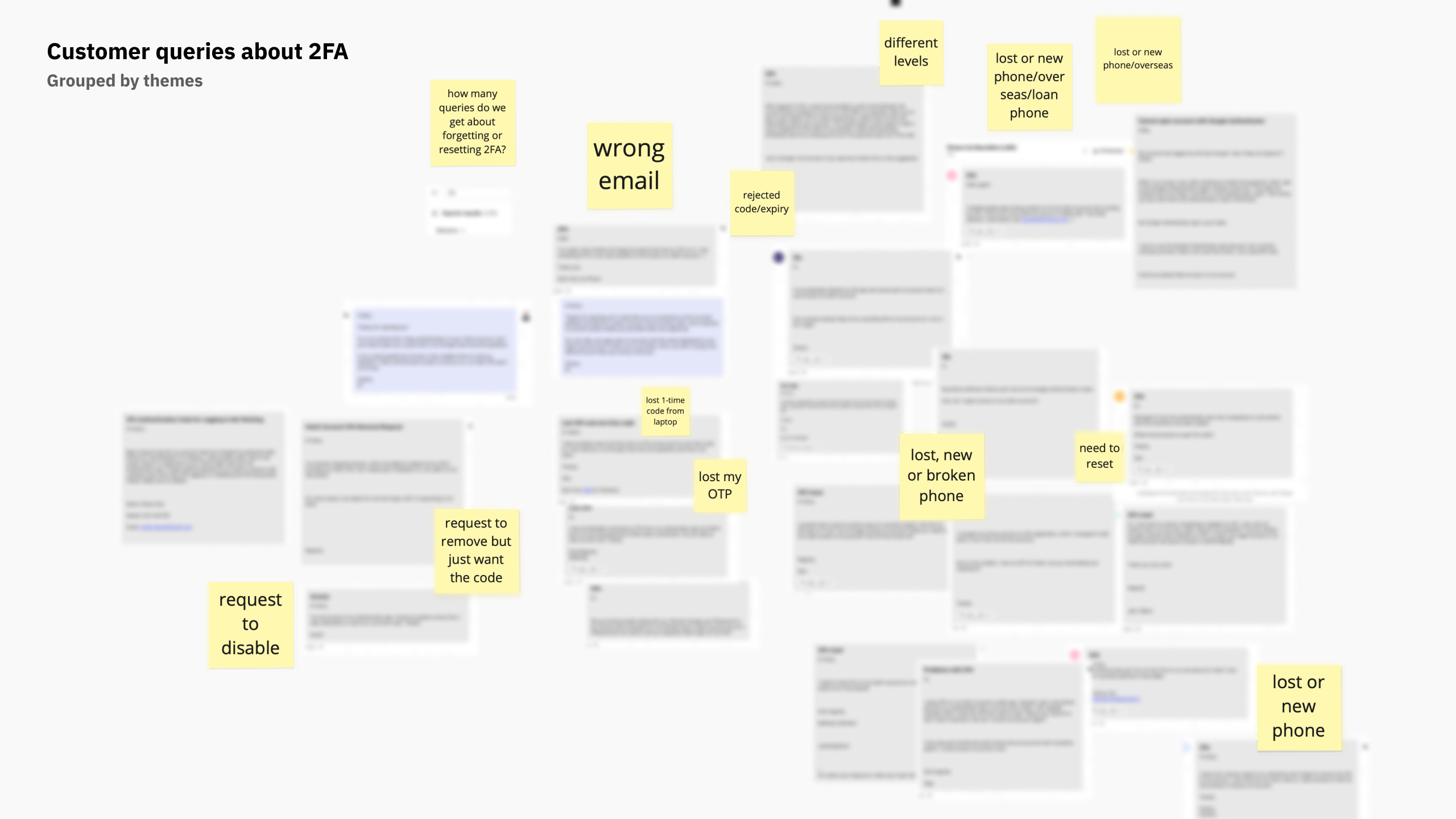
Gathering insights from workshops with internal stakeholders, we found more conflicting viewpoints. Making the secure login a mandatory feature would clearly increase the security of the product and satisfy the legal team. However, it would also create more incidents of people getting locked out and increase the workload for the customer service team.
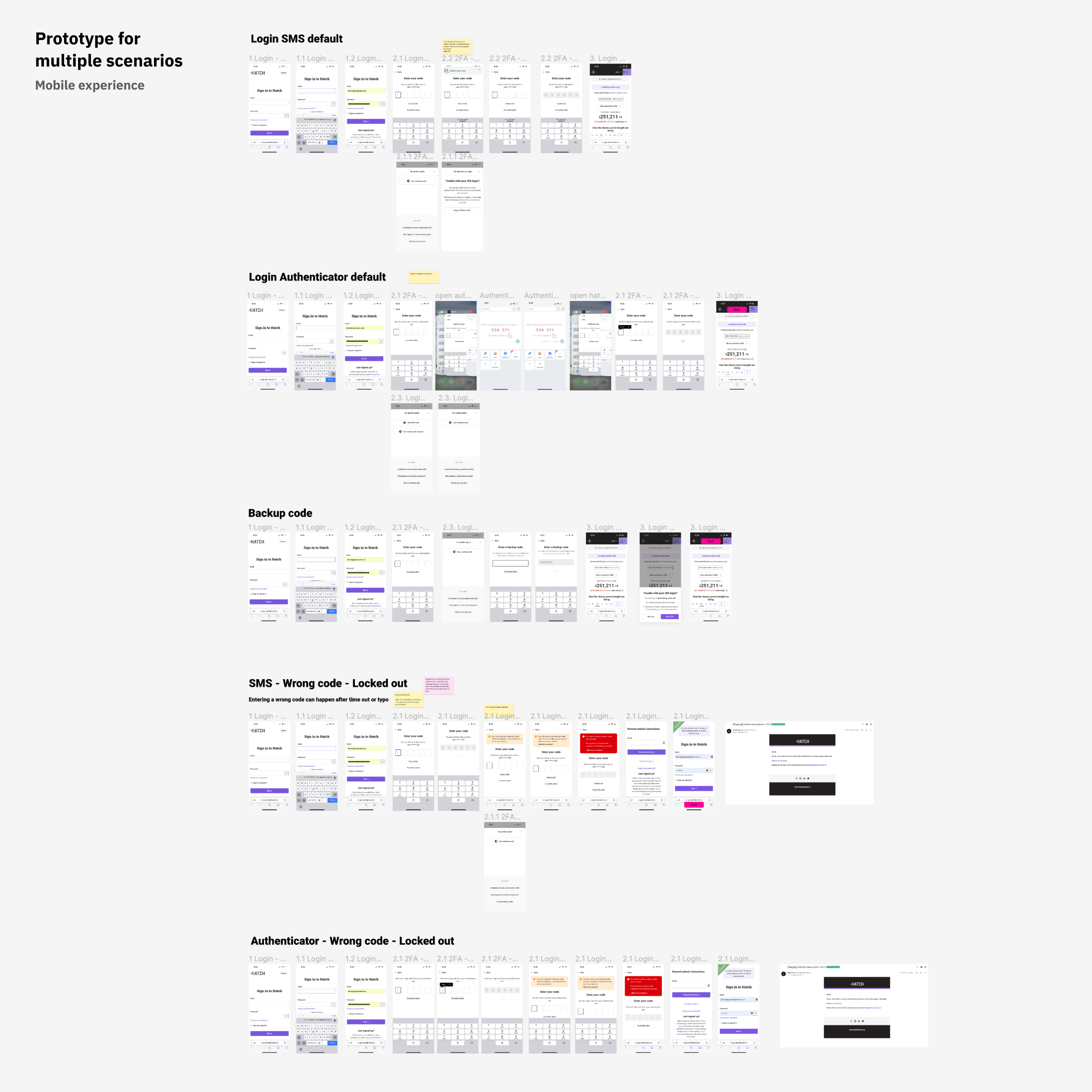
The main challenge of this project was to come up with a solution that balanced the various needs presented by the customers, business, security experts, and regulations. When seeking agreement on key decisions, we would often discover more questions. We documented our findings along the way and used technical research and design explorations to evaluate different solutions. In this manner, we could walk through a robust decision-making process and finalize our proposal.


CASE STUDY 02

Reducing complexity by reducing confusion
Client
Hatch Invest (New Zealand),2022
Role
Senior Product Designer
The financial service provider Hatch needed to re-design its document upload process to streamline communications between customers and operations. This was especially important for customer due diligence procedures.
Coming onto the project, I interviewed the customer service team and helped them define the process and document types. As part of this, we simplified the requirements and transferred abstract financial concepts into a more human language.
I then designed a simple prototype for user testing. It became clear that the user journey would be likely interrupted and happen across multiple devices. After a couple of iterations, I ended with a design that allowed the user to access the uploader from different devices.
The real impact – and hopefully relief for the customer service team – would be measured once the feature was released. The team expected to spent less time per customer on due diligence processes.


 Tina Serowski