
Driving research
Getting UX research done is quite an achievement. There is the part of doing the actual research – and there is the part of getting everyone convinced it’s a good idea and worth spending resources on. It’s an ongoing effort. It takes political work to get the stakeholders involved and get their backing. And it’s experience and skill to connect research activities to a wider strategy, follow them through efficiently, and communicate their outcomes.
CASE STUDY 10

Finding a way to do continuous customer research
Client
Hatch Invest (NZ), 2022
Role
Senior Product Designer
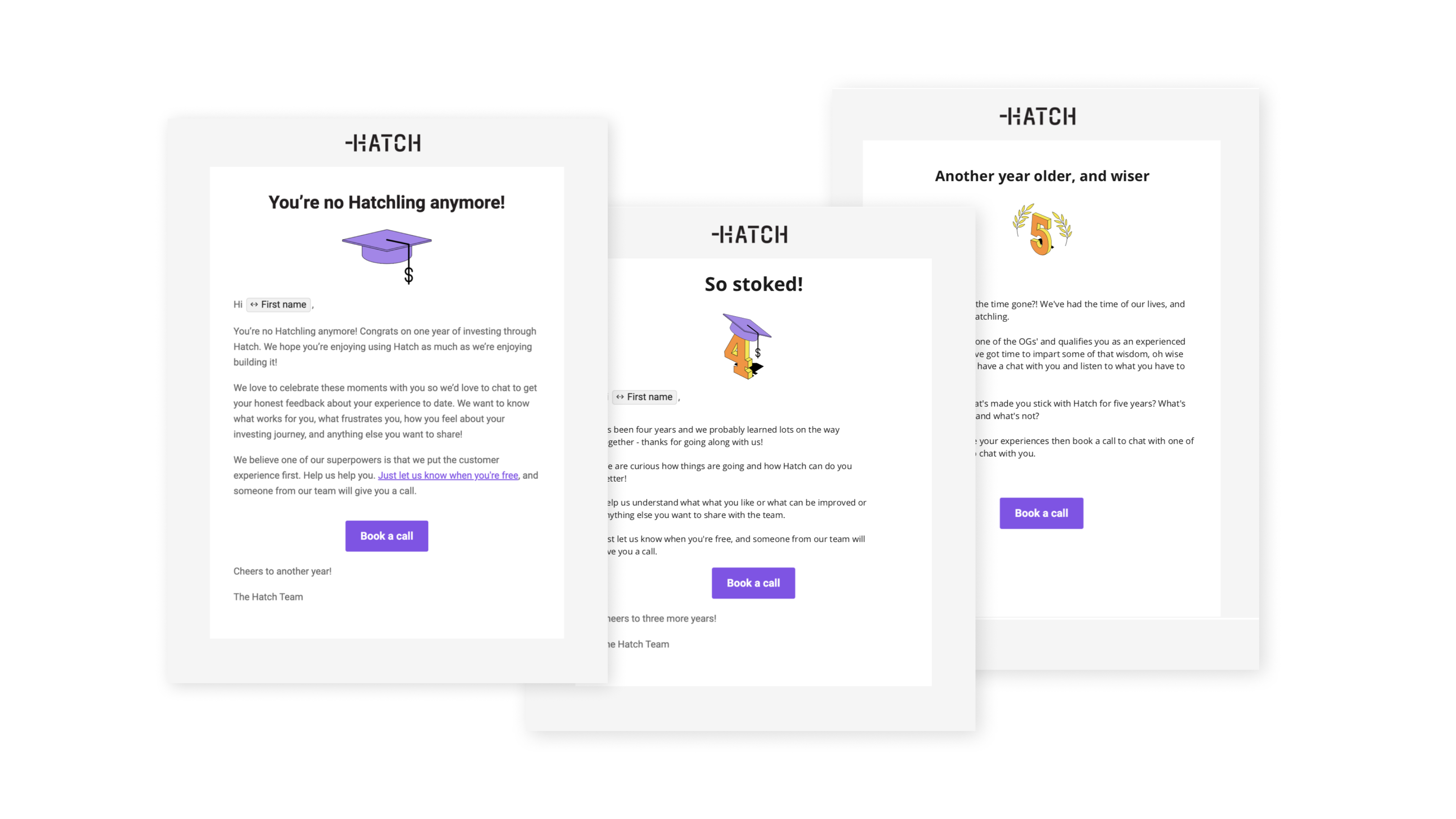
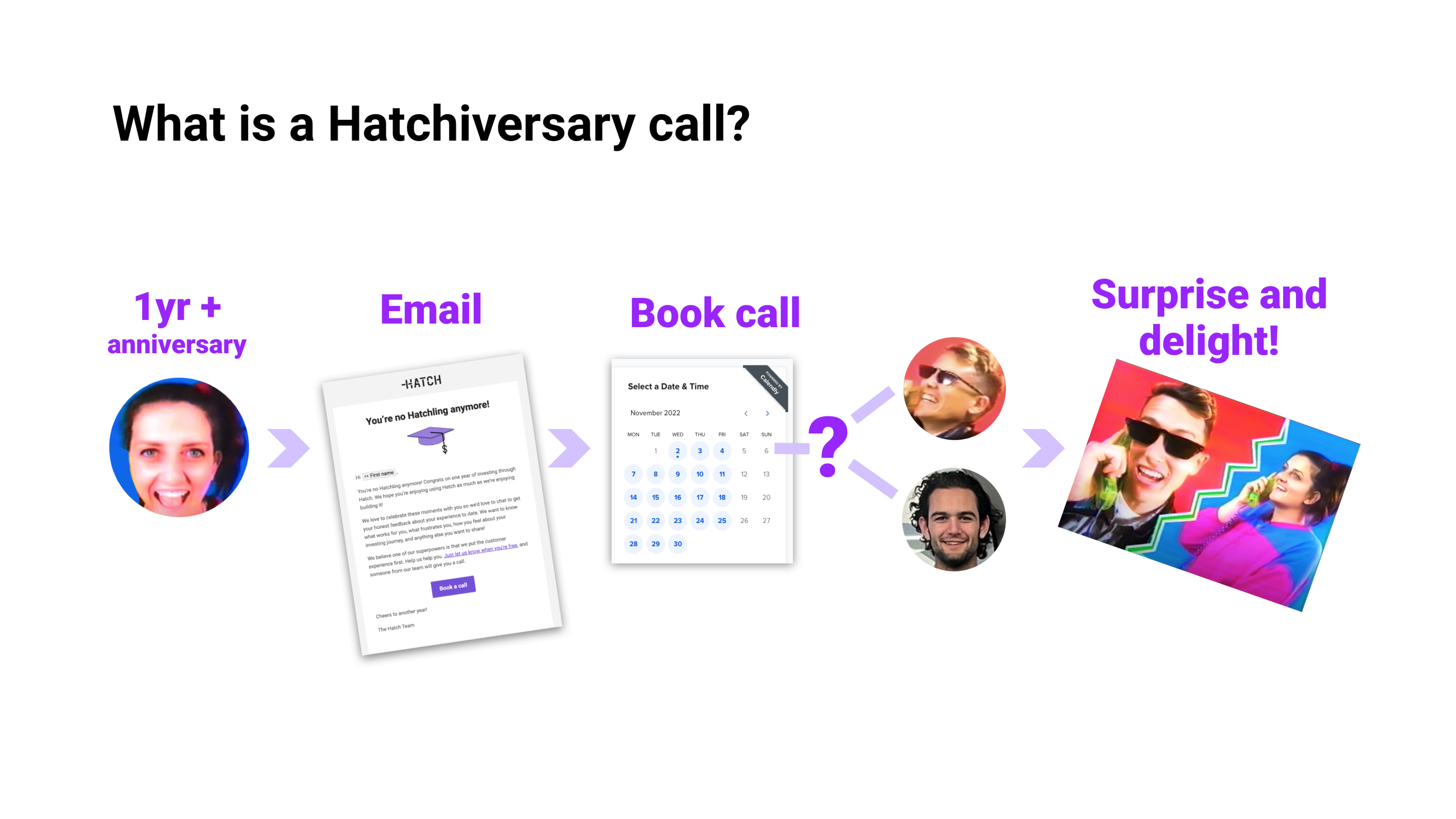
At Hatch we found a very cost-effective way to conduct continuous customer research – more or less by accident. Part of their original product service was to offer their customer a check-in call after a year of being with them. It was meant to create delight and make the customer feel special. When the UX design team reviewed their research strategy in 2022, they decided to give this product offering a spin. From now on, each call became a source for customer insights on current research topics. Following a rough script, we took turns taking calls amongst the UX and CX team.
It was a great tool for creating customer empathy amongst the team and something we wanted to make accessible for the wider business. Leading the initiative at that time, I presented findings from the previous months and how we’d run the project. It was a fun and open invitation to everyone at Hatch to join and convinced the CEO to start taking calls, too.

CASE STUDY 11
Using motivational mindsets to describe customers
Client
Hatch Invest (NZ), 2022
Role
Digital Product Designer
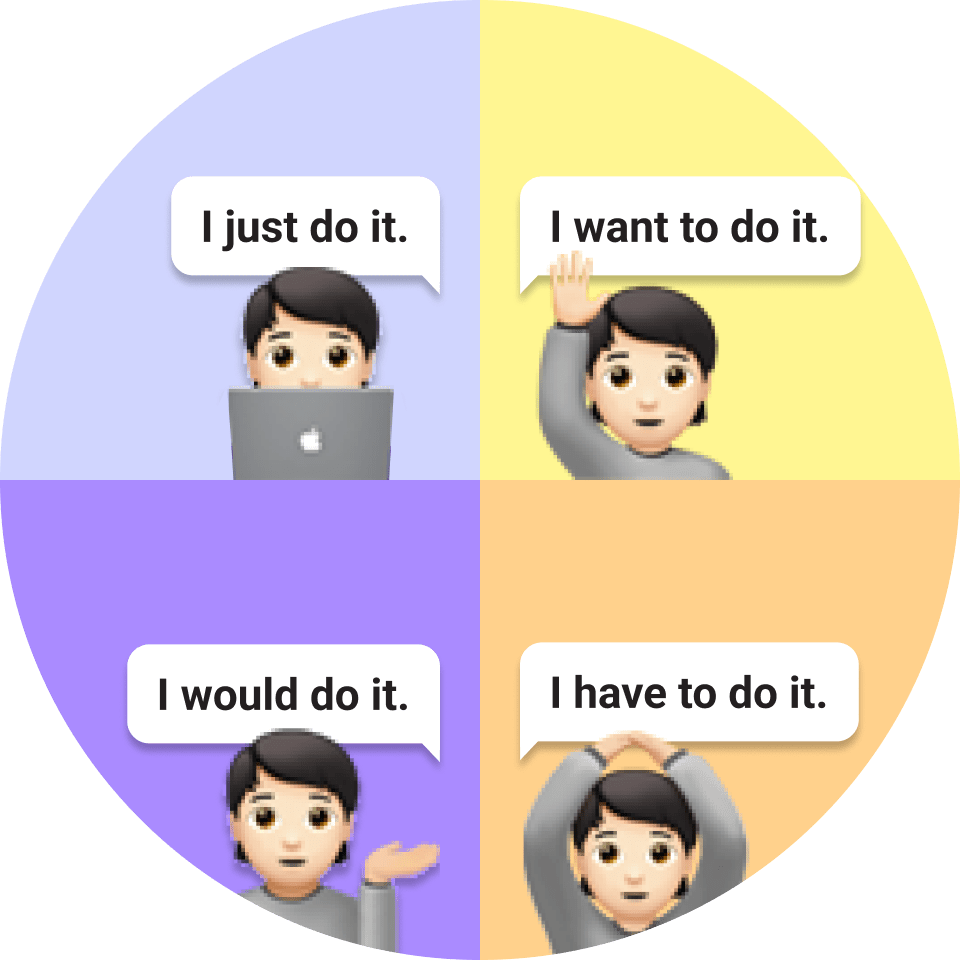
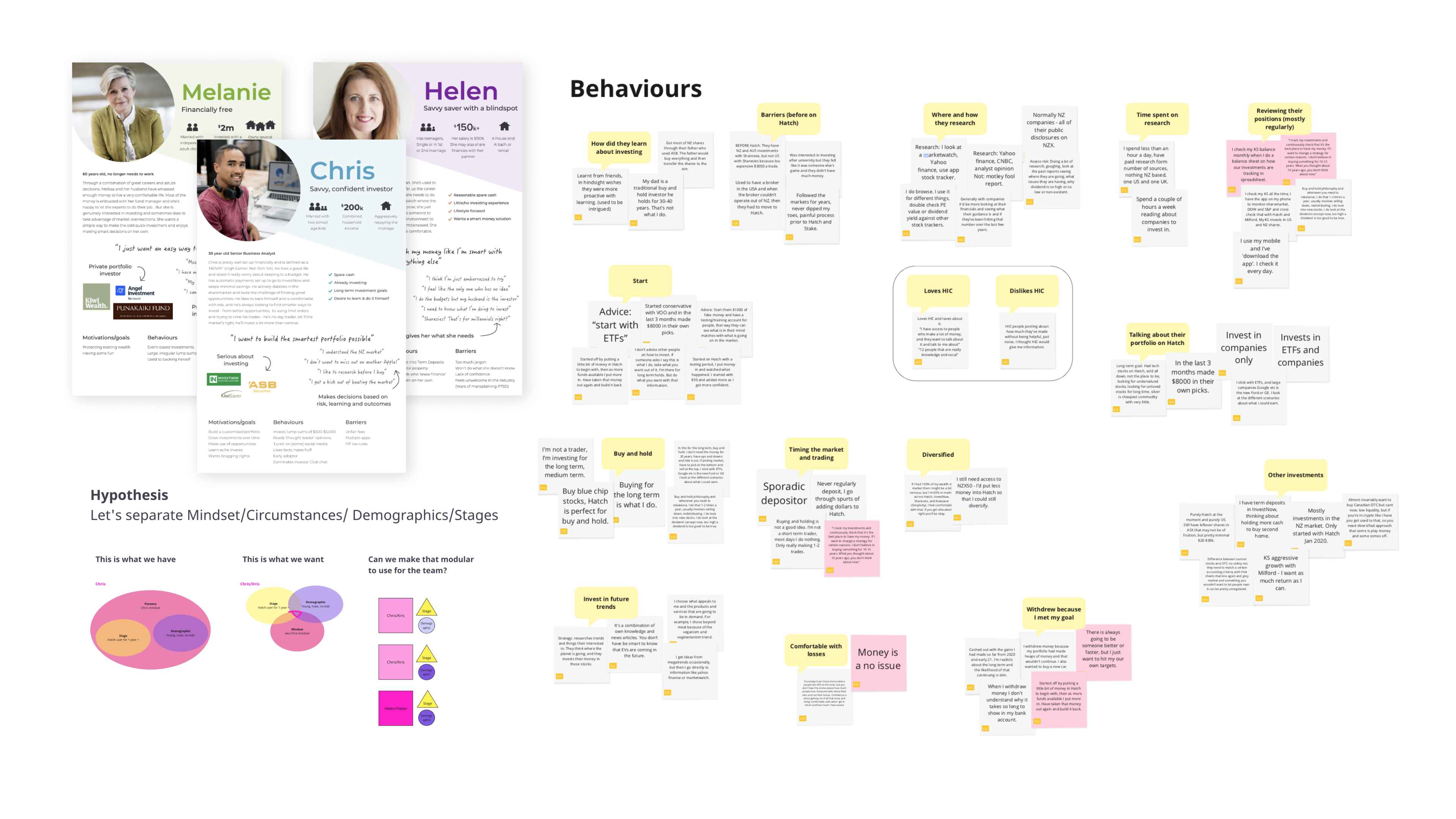
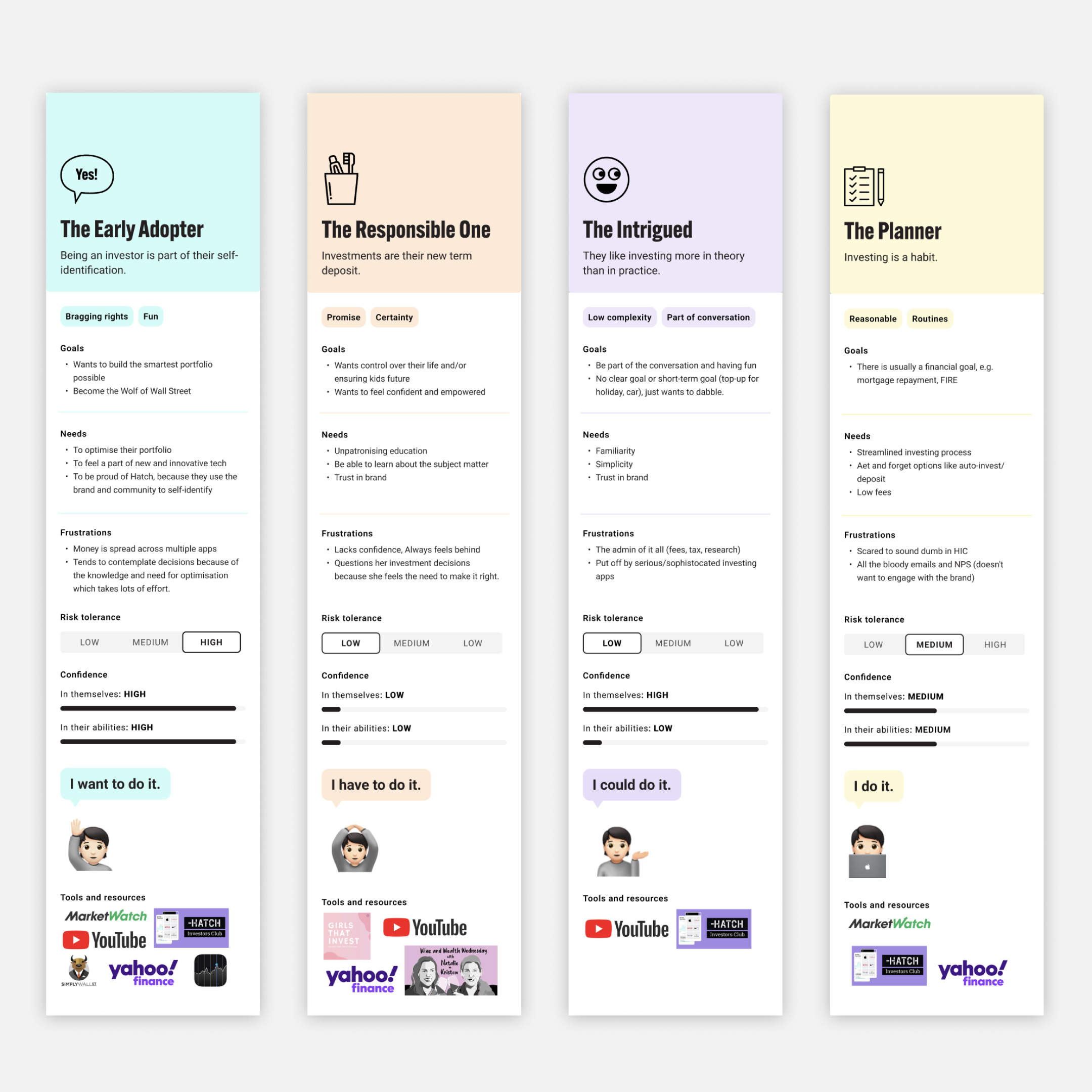
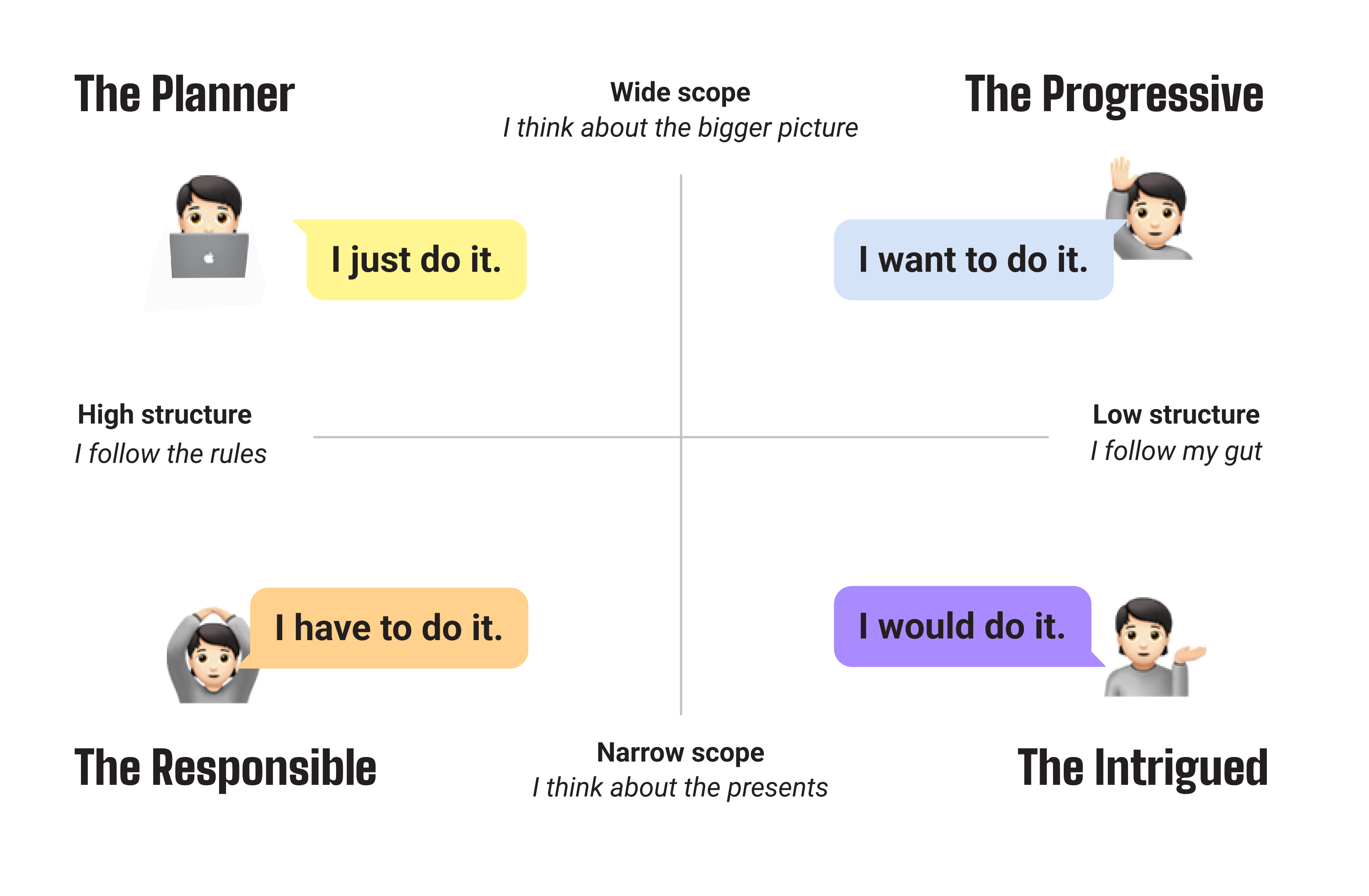
UX designers often generate artefacts to share the things they know about the customers across the board. At Hatch, we were looking for a way to describe our customers in regard to their motivations for investing and how they act. Why might the person use our product? What kind of job do they want our product to do for them? We wanted to define our customer’s mindsets.
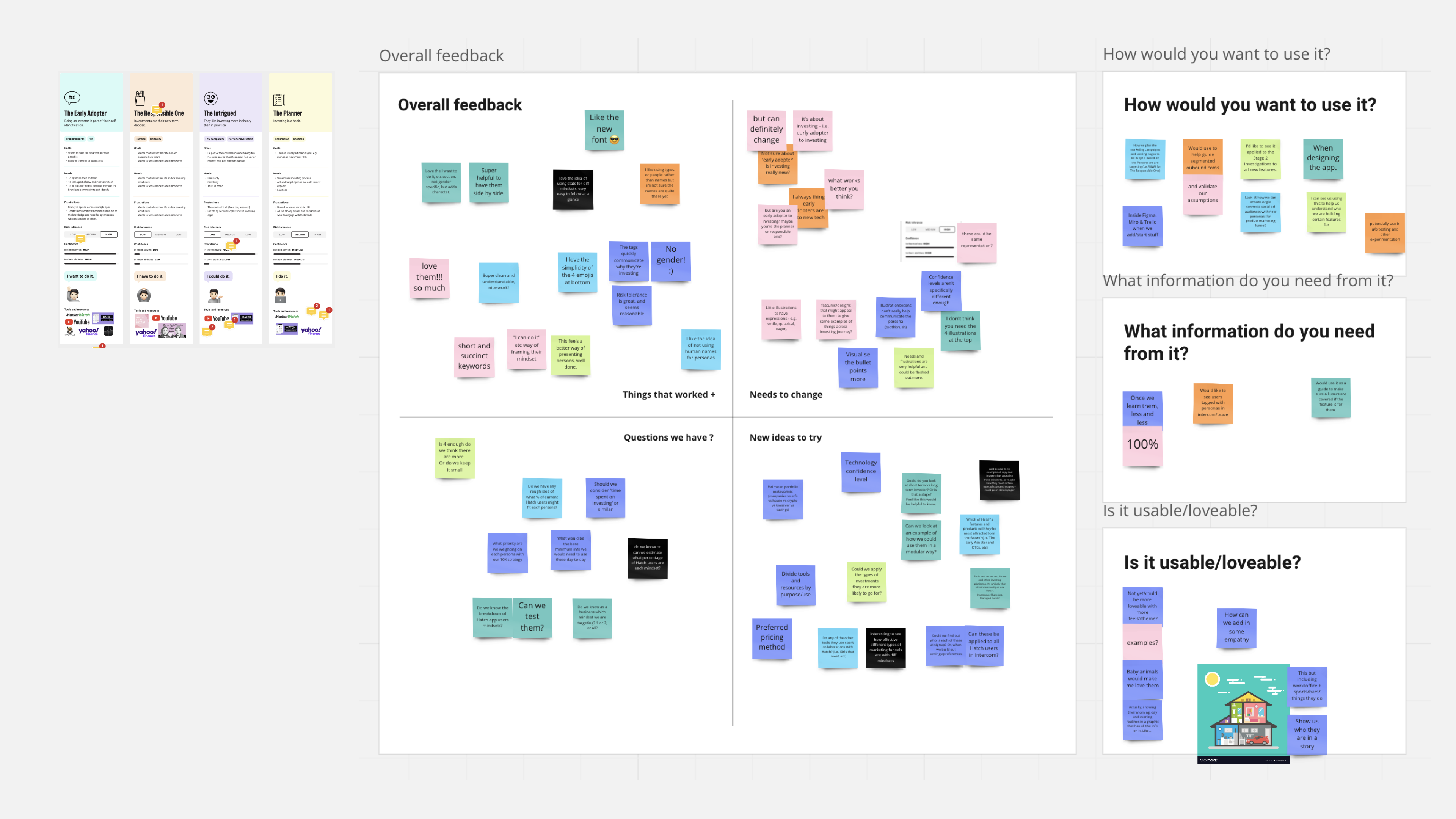
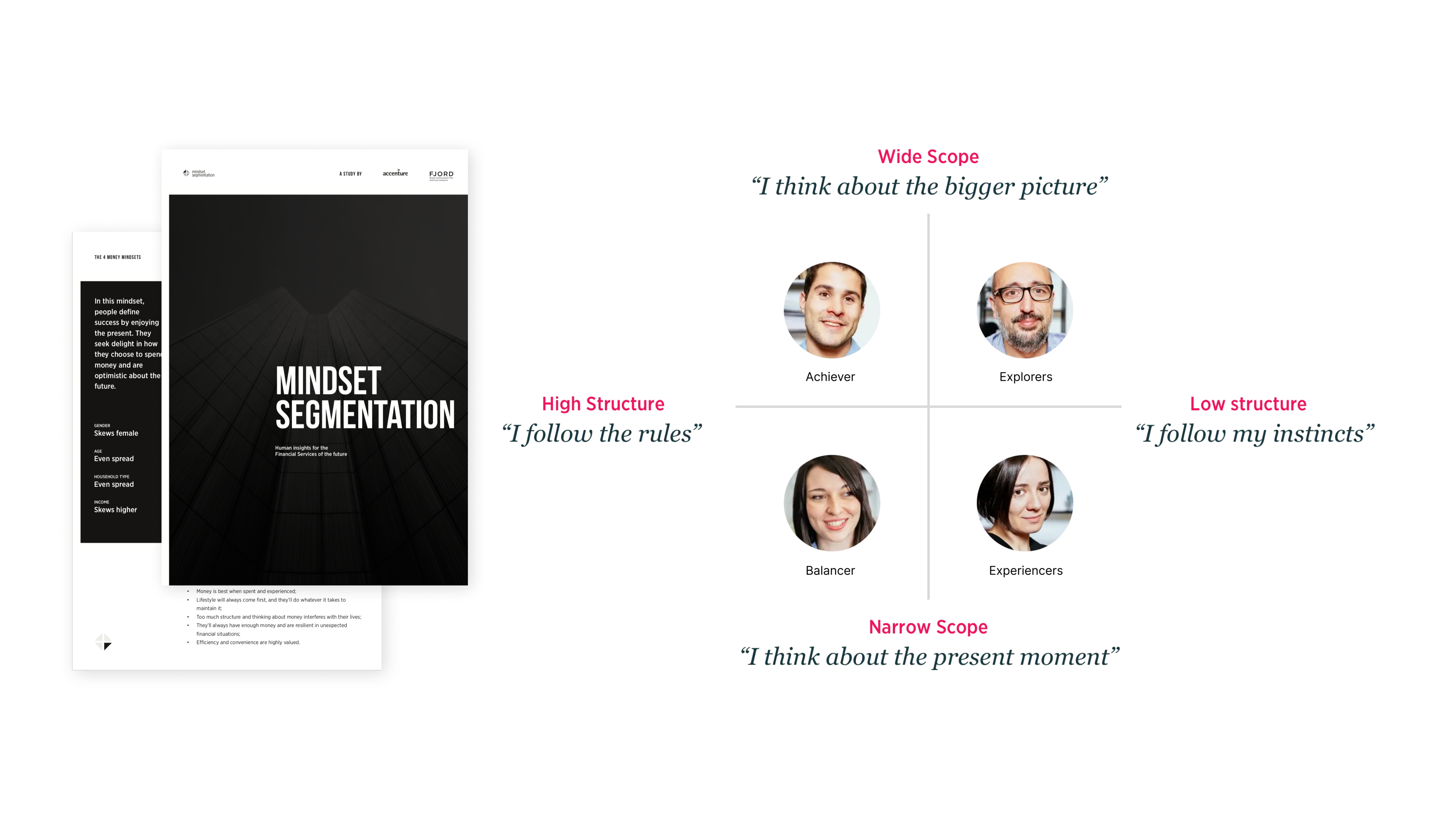
With the help of the junior designer, I started with a review of existing customer knowledge, like interview notes and documentation of our existing Personas. We were looking for values, needs and wants and how they correlated with behaviours. Cross-referencing resources about theories on motivation and other studies we gained more confidence in creating our own model. We started drawing a rough picture of four different mindsets and reviewed these with the wider design team. This back and forth ensured we would create an artefact that could be widely adopted.
 Tina Serowski